About Me
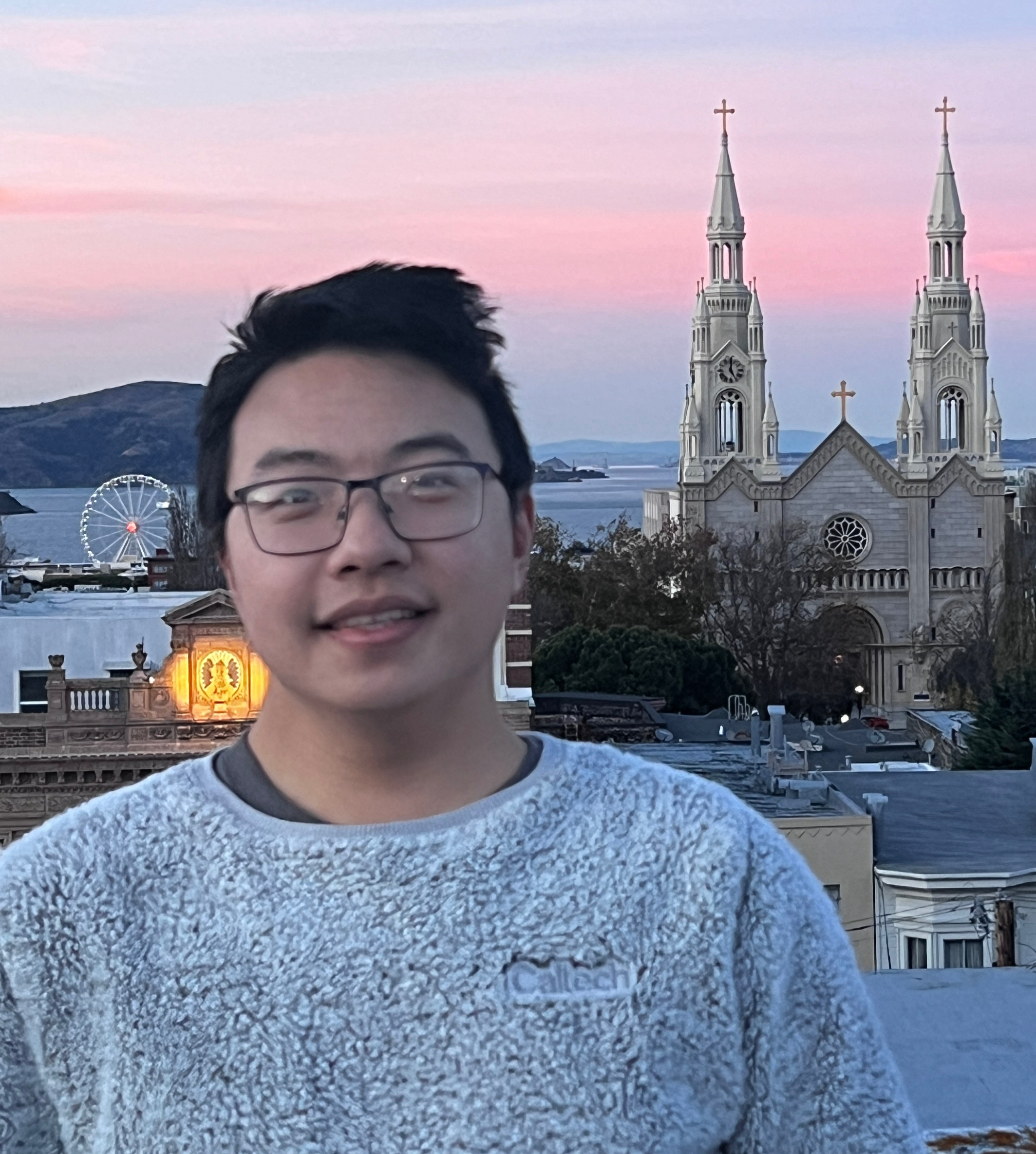
Hello there! My name is Zihao Qi (齐子皓). I am a fourth-year PhD Candidate in Physics at Cornell University. I am fortunate to be advised by Prof. Christopher Earls. Prior to Cornell, I completed my undergraduate degree in Physics at Caltech, where I worked with Prof. Gil Refael and Prof. John Preskill.
I am currently working at the intersection of physics and machine learning. In one direction, I explore how machine learning tools, such as neural-network quantum states, can be applied to study many-body quantum systems and quantum dynamics. More recently, I have become interested in using statistical physics to understand the inner workings of Large Language Models (LLMs). In the past, I have studied non-equilibrium quantum systems, Floquet prethermalization, quantum information dynamics, and various lattice models.
In my spare time, I enjoy playing soccer, card and board games, and hiking around Ithaca.
Contact: zq73 [at] cornell [dot] edu.
05/2026: We recently proposes Universal Neural Propagator (UNP), a single model that transfers across a function space of driving protocols and initial states. Check it out here!
04/2026: Our paper on how neural-operator learning provides a new paradigm of quantum dynamics simulation has been accepted as an article in PRX Quantum.
03/2026: Conventional approaches to simulating driven systems are protocol-specific and require re-evaluation for each new driving Hamiltonian. In a recent work, we propose the Neural Operator Quantum State (NOQS), a foundation model for quantum dynamics that directly learns the functional mapping from driving protocols to time-evolved quantum states. Our framework captures time evolution accurately for both in- and out-of-distribution driving protocols, as well as transfers across temporal discretizations.
01/2026: Lanczos coefficients encode important information about operator dynamics, but computing long sequences is numerically expensive and unstable. Extrapolating the coefficients based on asymptotic forms, on the other hand, misses subtle structures that strongly affect reconstructed dynamics. In our recent work, we propose a transformer-based approach that captures the subleading, causually related structures in the coefficients, achieving order-of-magnitude reduction in error.
12/2025: In a recent paper, we study a dissipative variant of the Yao-Lee spin orbital model. We discuss the model’s exact solvability, exponentially large steady-state manifold, and PT symmetry breaking. Our work is now published in Phys. Rev. B..
10/2025: I attended the KITP Conference Frontiers of Programmable Quantum Dynamics: Advances and Applications and presented a poster on how Fourier Neural Operators serve as a computational surrogate for quantum dynamics.
09/2025: Our recent work proposes using Fourier Neural Operators as an effective, accurate, and scalable surrogate model for Floquet quantum dynamics, with potential applications to processing measurements from NISQ devices – check it out!
08/2025: I have passed the Admission to Candidacy Exam and will be awarded a Master’s degree in Physics.
03/2025: I attended the APS Global Physics Summit in Anaheim, CA and presented our work on the real-space topological invariant for time-quasiperiodic Majoranas. The slides are available here.
11/2024: I have joined the group of Prof. Christopher Earls in the Department of Civil and Environmental Engineering at Cornell!
07/2024: Our recent paper, which defines a real-space topological invariant for time-quasi-periodic superconducting systems (whose energy spectra is dense!), has now been published in PRB as an Editors’ Suggestion.